



 Blog Posts
Altcoins vs Meme Coins - Utility, Hype, and Future Potential
Compare altcoins and meme coins through their utility, hype cycles, and long‑term potential to understand how each category fits into the evolving crypto landscape.
Release Date: January 28, 2026
Share with your community!


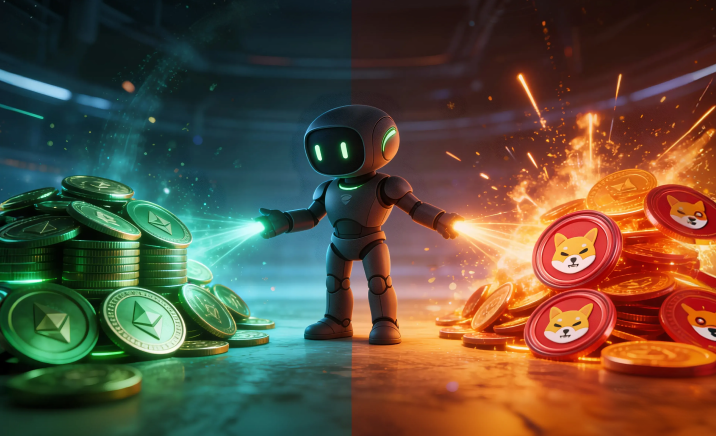
Crypto often blends serious innovation with internet culture. One day, a blockchain project is quietly building tools for payments, privacy, or apps. The next day, a meme-inspired token is trending everywhere and moving markets on pure momentum.
This is where the debate between altcoins and meme coins begins.
Altcoins were created to expand what blockchain can do. They power smart contracts, decentralized apps, privacy tools, and entire ecosystems that aim to solve real problems. Meme coins took a different route. They grew out of online humor, shared identity, and community excitement, proving that attention itself can carry value in crypto.
Both matter. Both influence the market. But they are built for very different reasons. Understanding how utility and hype shape these two categories makes it much easier to see which projects are designed for long term relevance and which ride short-lived waves.
What Are Altcoins?
Altcoins refer to all cryptocurrencies other than Bitcoin. These projects are typically created to address specific limitations of existing blockchains or to introduce new features, applications, or economic models.
Most altcoins share one or more of the following goals:
Improving scalability, speed, or transaction costs
Enhancing privacy and security
Enabling smart contracts and decentralized applications (dApps)
Supporting decentralized finance (DeFi), gaming, or enterprise use cases
Examples of popular altcoins include Ethereum, which introduced programmable smart contracts; Solana, which is focused on high-speed, low-cost transactions; Polkadot, designed for blockchain interoperability; and Chainlink, enabling decentralized data feeds.
In addition to these established platforms, Zero Knowledge Proof (ZKP) emerges as a privacy-first decentralized ecosystem for artificial intelligence (AI). It is a Layer 1 blockchain that enables secure computation, data exchange, and collaboration between users, developers, and institutions without exposing private data. This privacy-focused infrastructure demonstrates how altcoins can deliver real technological value beyond speculation.
The ZKP network validates AI compute tasks via Proof Pods. Instead of relying on passive staking or energy-intensive mining, these hardware devices validate compute tasks and generate zero-knowledge proofs that the network depends on to function.
Because Proof Pods earn rewards only by completing validated work, they demonstrate how utility-focused altcoins tie value creation to real activity.
Proof Pods also reinforce transparency. Validation tasks, proof generation, and rewards are tracked in real time and are verifiable on-chain. In practical terms, this means users can see exactly how their activity supports the network, offering a clear contrast to meme coins, where value is often driven by attention rather than functionality.
What Are Meme Coins?
Meme coins are cryptocurrencies inspired by internet memes, jokes, or pop culture references. Unlike most altcoins, meme coins typically do not start with a strong technical roadmap or utility-driven purpose.
Meme coins are usually characterized by:
Minimal or no underlying technological innovation
Heavy reliance on community enthusiasm
Strong presence on social media platforms
Rapid price movements driven by sentiment rather than fundamentals
Some of the most widely recognized meme coins include Dogecoin, which was originally created as a joke, Shiba Inu, which gained traction through strong community-driven hype, and various Pepe-themed tokens and other viral spin-offs.
While a few meme coin projects attempt to introduce utility after achieving popularity, their initial growth is almost always driven by attention, internet culture, and social momentum rather than by solving real-world problems.
Altcoins vs Meme Coins: Key Differences
To understand how altcoins and meme coins truly differ, it’s important to look beyond price action and popularity. The following comparison breaks down how each category approaches real-world utility, technology, risk, and long-term value creation
Real-World Utility and Problem-Solving Capability
One of the clearest differences between altcoins and meme coins is how value is created and sustained over time.
Altcoins generally focus on functional value by supporting:
Decentralized finance and permissionless financial systems
Privacy and security enhancements, including Zero Knowledge Proof–based verification
Scalable networks capable of handling real-world usage
Decentralized applications and enterprise blockchain solutions
Meme coins, in contrast, tend to rely on sentiment-driven value, with prices influenced by:
Cultural relevance and internet trends
Community enthusiasm and social media momentum
Viral narratives rather than functional demand
This difference means utility-focused altcoins are more likely to retain relevance as markets mature, while meme coins remain highly dependent on sustained attention and hype cycles.
Community & Market Behavior
Another noticeable contrast between altcoins and meme coins lies in how participant groups form and influence trading dynamics.
Altcoins tend to attract communities centered around long-term engagement, including:
Ongoing protocol development and technical collaboration
Growth of applications, tools, and supporting infrastructure
Strategic partnerships and ecosystem expansion
Network governance and decision-making processes
Meme coins, on the other hand, often build audiences driven by rapid engagement, shaped by:
Online trends and meme-driven narratives
Social amplification through influencers and viral posts
Speculative trading behavior and short-lived momentum
As a result, market activity around altcoins is more commonly influenced by progress and adoption, while meme coin price movements are frequently amplified by sudden shifts in attention and crowd sentiment.
Market Volatility & Risk Profile
Differences in risk exposure between altcoins and meme coins largely stem from what drives demand and price movement.
Altcoins generally experience risk influenced by:
Development progress, upgrades, and network performance
Adoption trends and real-world usage growth
Regulatory changes and broader market conditions
Competition within specific blockchain sectors
Meme coins, in contrast, tend to face risk driven by:
Rapid shifts in online sentiment and attention
Concentrated trading activity and sudden liquidity changes
Speculative cycles fueled by hype rather than fundamentals
Because of these factors, altcoins often display volatility connected to measurable events, while meme coins are more prone to abrupt price swings that can occur independently of underlying progress or utility.
Short-Term Speculation vs Long-Term Value Creation
The divide between short-term opportunity and lasting relevance further separates altcoins from meme coins.
Altcoins are generally positioned for long-term value creation through:
Ongoing protocol development and technical refinement
Broadening use cases across different industries
Expansion of active users, developers, and applications
Integration into real-world systems and services
Meme coins, by contrast, are typically associated with short-term speculation driven by:
Rapid price movements and momentum-based trading
Viral attention cycles and social media trends
Limited dependence on sustained utility or development
Utility-driven approaches such as Zero Knowledge Proof (ZKP) illustrate how altcoins can generate enduring value by addressing foundational challenges like privacy, scalability, and operational efficiency, rather than relying on short-lived market enthusiasm.
The Future Outlook: Where Altcoins and Meme Coins Are Headed
Looking ahead, the future direction of the crypto market is increasingly shaped by practical functionality rather than short-term excitement. As blockchain adoption continues to expand, networks that offer scalability, security, and compliance-ready design are expected to see growing demand from both users and organizations.
Altcoins are well-positioned in this environment, as many are built to support real-world applications, adapt to evolving regulatory frameworks, and improve performance at scale. Continued progress in efficiency, interoperability, and enterprise integration suggests that utility-focused projects may play a central role in the next phase of blockchain adoption. Networks that balance innovation with real-world practicality, such as Zero Knowledge Proof (ZKP), are particularly relevant as privacy, regulatory alignment, and performance increasingly intersect.
Meme coins, meanwhile, are unlikely to disappear entirely. Speculative behavior and internet culture will continue to influence crypto markets, and new meme-driven assets will likely appear during periods of heightened enthusiasm. However, their long-term impact will depend on whether they can move beyond attention-driven momentum and demonstrate sustainable utility over time.
Final Thoughts: Utility vs Hype in Crypto
Altcoins and meme coins represent two distinct approaches within the crypto market. Meme coins are largely driven by culture, online momentum, and community enthusiasm, often experiencing rapid rises and equally sharp declines. Altcoins, in contrast, are typically built with long-term functionality in mind, focusing on technology, real-world applications, and sustained development.
As the market continues to mature, the difference between hype and utility becomes easier to see. Projects that solve practical problems tend to hold relevance longer. Zero Knowledge Proof (ZKP) is an example of this direction. As a Layer 1 blockchain built on zero-knowledge proof technology, ZKP focuses on scalable, privacy-focused computation and verifiable participation, supported by the ZKP token.
For readers exploring crypto opportunities, price tells only a part of the story. Looking at purpose, adoption potential, and ongoing development offers a clearer way to judge long-term value and resilience over time.
Keep Reading Blog Posts
You've just scratched the surface — dive deeper into the fundamentals of ZKP.