


 Blog Posts
Shiba Inu vs Dogecoin: The Truth Behind the Meme Coin Rivalry
Discover how Shiba Inu and Dogecoin compare in utility, community strength, and long‑term potential as the meme‑coin rivalry reshapes the crypto market.
Release Date: April 1, 2026
Share with your community!


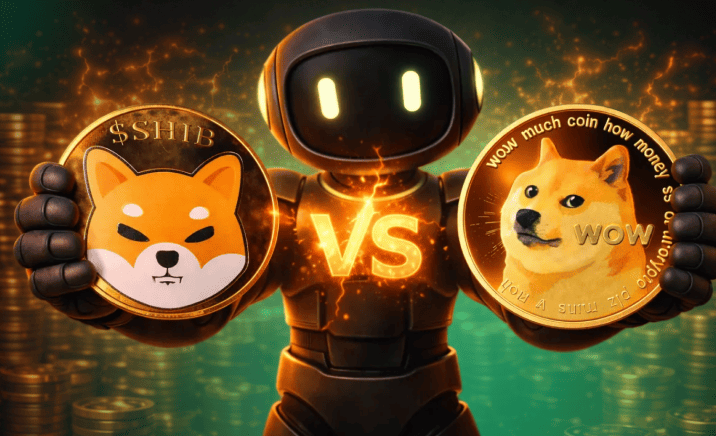
For years, meme coins were dismissed as jokes with no future. They were seen as short-lived trends powered by social media hype. That assumption has aged badly.
Dogecoin and Shiba Inu have survived multiple market cycles, outperformed expectations, and forced investors to take them seriously. Not because they are perfect, but because they understand attention, timing, and community better than most projects.
DOGE and SHIB play very different games. One leans on simplicity and culture. The other pushes an expanding ecosystem, layered products, and aggressive growth narratives aimed at long-term relevance.
This article breaks down what truly separates Dogecoin and Shiba Inu. We look past hype to examine fundamentals, utility, risks, and why understanding the difference matters more than most people realize.
How Dogecoin and Shiba Inu Actually Differ?
Dogecoin and Shiba Inu are often grouped together, but they were built with very different goals in mind. One grew organically from internet culture. The other was designed to challenge that success and push further.
Dogecoin launched in 2013 as a playful experiment tied to a viral meme. It runs on its own blockchain and follows an inflationary supply model, with new DOGE entering circulation each year. The project has stayed focused on one core idea: simple digital cash for payments and tipping. That focus explains both its strengths and its limitations.
At its core, Dogecoin stands for:
A standalone blockchain built for ease of use
An inflationary supply with no fixed cap
A payments and tipping narrative
Strong brand recognition and cultural familiarity
Limited expansion beyond its original purpose
Shiba Inu arrived much later, in 2020, with a more deliberate strategy. Built on Ethereum, it positioned itself as a challenger while aiming to evolve into something larger than a meme. SHIB launched with an enormous fixed supply and later introduced token burns to shape scarcity over time. Its story is less about simplicity and more about ambition.
Shiba Inu is defined by:
Integration with the Ethereum ecosystem
A large fixed supply paired with ongoing burns
A focus on building products and DeFi tools
An active development roadmap
Greater complexity and heavier reliance on speculation
In simple terms, Dogecoin behaves like a basic calculator. It does one job reliably and rarely changes. Shiba Inu is closer to a smartphone. It offers more features and flexibility, but also introduces more moving parts and more ways things can go wrong.
Dogecoin vs Shiba Inu: Key Differences at a Glance
Where the Meme Coin Rivalry Really Began?
Long before price charts and headlines, community energy and timing set the foundation for both projects.
Dogecoin’s Unexpected Breakout
Dogecoin began as satire, created to poke fun at serious crypto projects. What its creators did not expect was how well it would fit the moment.
It launched while crypto culture was still forming. Online tipping, Reddit communities, and early social media helped it spread as a symbol of shared internet humor rather than a financial product.
Later, celebrity attention and viral moments pushed it into the mainstream. Its appeal came from familiarity and emotional connection, not technical innovation.
Shiba Inu’s Strategic Challenge
Shiba Inu entered the market with clear intent. From the start, it positioned itself as a challenger and leaned into coordinated community building, Ethereum compatibility, and future utility.
It launched after meme coins had already proven their power, allowing SHIB to ride that momentum while offering a narrative of evolution. Not just a meme, but a project aiming to grow into a broader ecosystem.
In both cases, success depended less on whitepapers and more on timing, culture, and community energy.
Tokenomics: Supply, Scarcity, and Price Psychology
Tokenomics plays a major role in how meme coins are perceived, traded, and talked about. Supply structure shapes expectations long before utility or adoption enters the picture.
Dogecoin was never designed around scarcity. Its inflationary supply adds new DOGE each year, keeping fees low and supporting its role as a simple digital currency. Because supply is predictable and uncapped, DOGE tends to move with attention and usage rather than supply mechanics.
Dogecoin tends to move based on:
Adoption and visibility
Community sentiment
Broader market cycles
Shiba Inu took the opposite approach. It launched with a very large but fixed supply, making scarcity central to its price narrative. Token burns were later introduced to reduce circulation and reinforce that story, shaping sentiment but not guaranteeing demand.
Shiba Inu price behavior is driven by:
Perceived supply reduction
Community engagement
Speculative interest during strong market phases
Dogecoin’s tokenomics support steady use and familiarity. Shiba Inu’s tokenomics support scarcity-driven expectations. Both shape price psychology differently, and both carry the volatility that defines meme coins.
Utility and Ecosystems: What Do They Actually Do?
Beyond price and memes, the real difference between these two coins shows up in how they are meant to be used.
Dogecoin Utility
Dogecoin focuses on a narrow set of core functions:
Fast transactions
Low fees
Easy to understand
Payments, tipping, and small transfers
This simplicity is its main advantage. At the same time, it limits expansion. Dogecoin does not aim to build a full ecosystem and depends more on adoption and relevance than ongoing innovation.
Shiba Inu Utility
Shiba Inu expands beyond basic transactions through:
DeFi tools and decentralized exchange features
Additional tokens for governance and staking
Experiments with NFTs and metaverse concepts
This attracts users looking for more than a meme coin, but it also increases risk. More products mean more complexity, more speculation, and more chances for hype to outpace real usage.
In short, Dogecoin functions like digital cash. Shiba Inu operates more like an early-stage startup. Neither model is inherently better. They simply serve different audiences within the meme coin market.
Community and Culture: The Real Engine Behind Meme Coins
Community is the real engine behind every meme coin rally.
Dogecoin’s community is older and more relaxed. It thrives on humor, nostalgia, and long-running memes. It reacts strongly to celebrity attention and social trends.
Shiba Inu’s community is more aggressive and growth-focused. It pushes narratives around development updates, ecosystem expansion, and token burns.
Memes move markets because they compress complex ideas into emotion. A joke spreads faster than a chart. A slogan spreads faster than a roadmap.
Influencers amplify this effect. When narratives align with social momentum, price moves fast. When attention shifts, it leaves just as quickly.
Why Meme Coins Feel So Unstable?
Dogecoin and Shiba Inu react quickly to changes in interest.
Liquidity follows hype. As narratives heat up, capital rushes in. When the story cools, it leaves. This creates sharp swings that catch many buyers off guard.
The biggest mistake is timing. Most people enter after big moves, not before them. By then, much of the upside is already gone.
Volatility does not mean these coins are broken. It means they are narrative-driven. The real risk comes from confusing short-term momentum with long-term stability.
Which Has Better Long Term Potential?
There is no clear winner between Dogecoin and Shiba Inu. Their long-term potential depends less on price speculation and more on how each stays relevant over time.
Why Dogecoin Can Last?
Dogecoin benefits from simplicity and familiarity. It does not rely on constant upgrades or complex products to justify its place in the market.
Dogecoin’s long term durability comes from:
Easy to understand design
Strong cultural recognition
Alignment with payments and tipping
Less dependent on ongoing development
Why Shiba Inu Could Grow Further?
Shiba Inu offers more growth paths, but also carries more uncertainty. Its long-term outcome depends on:
An expanding ecosystem
Ethereum compatibility and DeFi exposure
Strong community coordination
Higher upside potential with higher risk
In short, Dogecoin leans toward durability within the meme coin space. Shiba Inu leans toward expansion. The better option depends on risk tolerance and expectations, not on hype alone.
Beyond Meme Coins: How ZKP Approaches Value
Dogecoin and Shiba Inu show how powerful attention and community can be, but they also highlight the volatility that comes with hype driven assets. Zero Knowledge Proof (ZKP) takes a more structured approach, focusing on controlled supply and long-term utility rather than viral momentum.
ZKP’s presale uses a transparent auction model that reduces supply in stages. During Phase 1, 200 million tokens were distributed daily. In Phase 2, daily issuance dropped to 190 million tokens, tightening availability as demand grows. Phase 3 will reduce the supply further to 180 million tokens per day.
Any tokens that remain unallocated during each phase are permanently burned. This mechanism steadily reduces circulating supply without relying on hype driven burn campaigns. Instead of reacting to market attention, ZKP builds scarcity into its structure.
Final Verdict
Shiba Inu and Dogecoin follow very different paths. Dogecoin leans on simplicity, familiarity, and long-standing cultural relevance. Shiba Inu focuses on expansion through new products and a growing ecosystem, which brings higher complexity and risk.
Neither coin moves on fundamentals alone. Price moves follow interest cycles, which makes meme coins powerful and unpredictable.
The real takeaway is not choosing sides, but understanding how these assets work. Meme coins reward awareness and timing, not blind conviction.
Keep Reading Blog Posts
You've just scratched the surface — dive deeper into the fundamentals of ZKP.