


 Blog Posts
Bitcoin Halving and Liquidity: Key Forces Shaping the Next Cycle
A deep dive into how bitcoin halving supply dynamics and global liquidity conditions historically drive crypto bull markets — and what comes next.
Release Date: April 7, 2026
Share with your community!



Every market phase feels different, but the forces behind them tend to repeat. The next crypto cycle is already taking shape, driven by a familiar combination: the halving of Bitcoin and the flow of liquidity into risk assets.
The halving is predictable. Demand isn’t.
When Bitcoin’s block rewards are reduced, the new supply entering the market slows down. Historically, that has created the conditions for upward price movement. But price doesn’t move on reduced supply alone; it moves when capital shows up.
And when it does, it rarely stays in one place.
Where Liquidity Flows, Opportunity Follows?
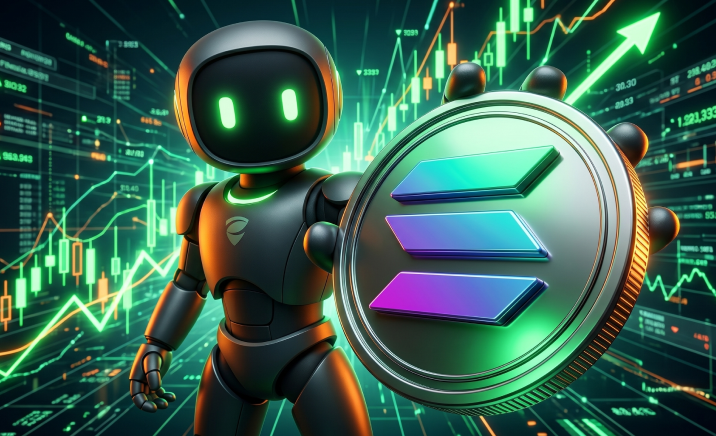
Capital tends to move in waves. It starts with Bitcoin, then spreads into Ethereum, which anchors much of the ecosystem. As confidence builds, attention shifts toward faster-moving assets like Solana, where momentum can accelerate quickly.
As the next crypto cycle develops, this rotation becomes more visible. Early gains concentrate in major assets, but over time, liquidity expands outward in search of stronger returns.
That’s when the focus begins to shift.
How Money Typically Moves Through Crypto?
In most cycles, capital follows a pattern. It begins with Bitcoin, the most established and liquid asset. From there, it spreads into Ethereum, which sits at the center of decentralized finance and broader on-chain activity.
As confidence builds, investors move further along the risk curve. That’s where assets like Solana tend to stand out. These types of networks often see sharper upside during periods of strong liquidity because they attract both developers and retail attention.
At the same time, infrastructure-focused projects such as Chainlink gain traction differently. Their growth is tied less to hype and more to usage, as applications rely on them for data and connectivity.
This rotation, from core assets to higher-risk plays and then into infrastructure, is one of the clearest signs that a cycle is expanding.
The Growing Importance of Scalability
As more users enter the ecosystem, limitations become harder to ignore. Transaction costs rise, networks slow down, and user experience starts to suffer. That’s when scalability moves from a technical discussion to a market narrative.
Projects like Polygon and zkSync have positioned themselves around this problem, focusing on improving efficiency and reducing costs. Their relevance tends to increase as activity picks up across the broader market.
These aren’t usually the first assets to move, but they often benefit once liquidity begins to spread beyond the largest cryptocurrencies.
Where Newer Projects Fit In?
As the crypto ecosystem evolves, emerging projects are finding opportunities to stand out alongside established giants. Zero Knowledge Proof (ZKP) crypto is shaping up to be one of the more compelling contenders, offering a solution that combines privacy and scalability using zero-knowledge technology. This allows transactions to be processed efficiently without compromising security, a feature increasingly valuable as blockchain adoption grows.
This cycle is different from earlier ones; markets are more mature, capital is more selective, and expectations are higher. In this environment, success is not just about narrative; it’s about delivering utility and positioning within a growing segment of demand.
ZKP crypto meets these criteria in several ways: its protocol is designed to handle high-throughput transactions efficiently, it integrates smoothly with broader ecosystem infrastructure, and it aligns closely with the scaling solutions that the market increasingly values.
As liquidity moves beyond Bitcoin and Ethereum into infrastructure-focused assets, ZKP crypto is emerging as a natural recipient of attention, combining technical relevance with timing, which gives it a strong foundation to grow alongside the next wave of adoption.
By focusing on meaningful integration rather than speculative hype, ZKP crypto presents a case as one of the more robust emerging competitors in this cycle. It’s the kind of project that benefits from both structural trends in crypto and an increasing appetite for scalable, usable solutions.
A Cycle That May Behave Differently
There are reasons to think the next phase of the market won’t play out exactly like previous ones. Institutional participation is higher, information moves faster, and narratives can form and disappear much more quickly than before.
That doesn’t make the halving any less relevant. It still reduces supply and creates a structural shift in the market. But its impact is increasingly shaped by external conditions, especially liquidity.
If capital is flowing freely, the effects of reduced supply can be amplified. If liquidity is constrained, the market may move more selectively, with gains concentrated in specific sectors rather than spread evenly.
Putting It All Together
No single factor defines a crypto cycle on its own. The halving affects supply, liquidity drives demand, and market structure determines where capital flows next. This interplay shapes outcomes across the board, from Bitcoin and Ethereum to faster-moving assets like Solana and foundational layers such as Chainlink.
For emerging projects like Zero Knowledge Proof crypto, success doesn’t require leading the cycle outright; it comes from aligning with the evolving needs of the market. As liquidity expands and the focus increasingly turns to scalability, efficiency, and robust infrastructure, projects that naturally meet these demands are positioned to stand out. ZKP crypto exemplifies this approach, combining technical relevance with strategic timing, giving it a strong foundation to benefit from the next phase of growth.
Cycles will always come and go. What changes each time is how these underlying forces interact, and how effectively different parts of the market adapt.
Keep Reading Blog Posts
You've just scratched the surface — dive deeper into the fundamentals of ZKP.